

Posted on Leave a comment

PVC Wall Panels: Which Type Is Right for Your Room

“Wall panel” covers a wide range of products, and the right one depends entirely on where it’s going. A panel built to shrug off a daily shower needs different properties to one going up behind a kitchen hob, or across a ceiling. Here’s how we split our range, and what each type is actually built for.

Bathroom & wet rooms

These panels are built around high moisture resistance and hygiene first — the two things that matter most in a room that’s wet every single day. Fitted correctly, they give you a fully waterproof, grout-free alternative to tiling, with none of the mould-prone grout lines a tiled shower eventually develops.

Kitchen & utility

Behind a hob or a worktop, the priority shifts to durability, heat resistance, and a surface that wipes clean in one pass. These panels are chosen for standing up to daily splashes and heat rather than constant standing water, which is why they’re specified separately from the bathroom range.

Wall cladding

Our decorative PVC cladding covers everything chosen for how it looks first — marble and stone effects, abstract patterns, gloss finishes — for feature walls and living spaces where the panel is doing a design job as much as a practical one.

Ceiling panels

Not every panel is rated to go overhead. Our ceiling range and matching coving are specifically built and rated for ceiling installation, finishing a wet room or kitchen from floor to ceiling in one consistent material rather than switching to paint above head height.

Installation & finishing

The panels themselves are only half the job — trims and adhesives are what actually make the finish look intentional rather than improvised. This range covers the essentials for finishing edges, corners and joins properly.

Not sure which category your room needs? Browse the full wall panel range or get in touch and we’ll point you to the right panel before you order.
Posted on Leave a comment

What Actually Happens When We Install Your New Radiator

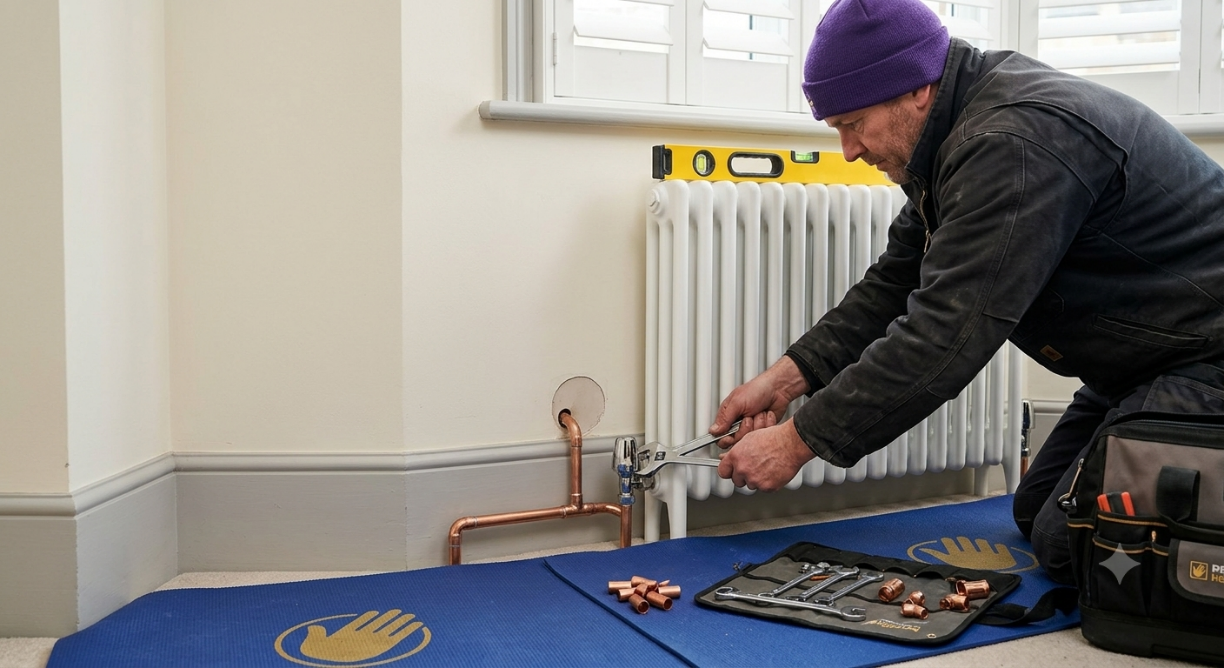
It’s tempting to think of a radiator swap as a quick job — old one off, new one on. In practice, a proper installation is five distinct jobs, each one protecting the finish and the performance of the unit you’ve just paid for. Here’s what’s actually involved when one of our installers is at your radiator.

1. Sizing and balancing, before anything is fitted

Every room loses heat at a different rate, depending on its size, the number of external walls, window area and insulation. Before your radiator goes anywhere, we calculate the output your specific room needs and check it against the model you’ve chosen. Once it’s up, the valves are balanced so it warms up in sync with the rest of the house — not left to lag behind while every other room is already warm.

2. Pipework adaptation

Few replacement radiators sit on exactly the same footprint as the one they’re replacing, especially if you’re moving from a single-panel radiator to a column or vertical design. We assess the existing pipework and modify, extend or replace it with new copper pipe so the new radiator lines up properly, rather than forcing a fit around pipes that were never meant for it.

3. Flushing the system

Old central heating systems accumulate sludge, rust and general debris over the years, sitting in the pipework long after the old radiator is gone. We flush this out thoroughly before the new unit goes in. Skip this step and that same sludge ends up circulating straight into your brand-new radiator, which is one of the most common reasons a “faulty” new radiator is actually just a dirty system.

4. Rust prevention

Once the system is clean, we add a high-quality chemical inhibitor. It’s a small step that protects your new radiator from corroding from the inside out — the kind of internal wear you’d never spot until a leak shows up years down the line.

5. Leak testing and bleeding

Last, every joint and valve is put through a high-pressure leak test, and the radiator is bled to remove trapped air pockets. Air in the system is the usual cause of a radiator that’s warm at the bottom and stone cold at the top — bleeding it properly at install means you get an evenly heated radiator from day one, not a follow-up call-out three weeks later.

Why it’s worth having it done properly

Every radiator we install is backed by our standard warranty, and installation is carried out by F-Gas certified engineers. If you’re planning a radiator upgrade, browse our full radiator range or get in touch and we’ll help you size the right one for your room before it’s even ordered.

Posted on Leave a comment

Why Your Air Conditioning Needs an Annual Service (Even If It’s Still Cooling Fine)

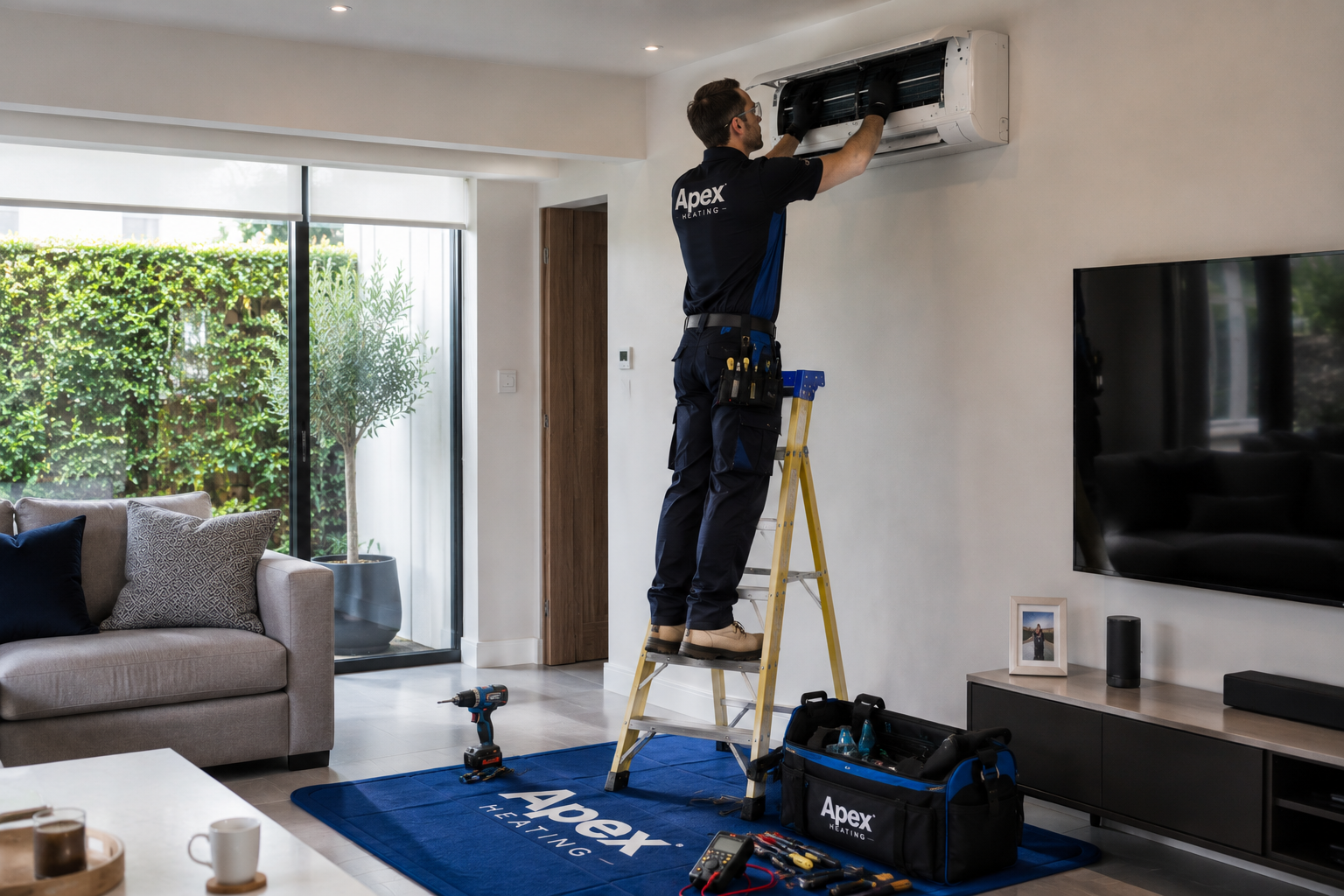
It’s easy to assume that if your air conditioning is still cooling the room, it doesn’t need attention. In our experience, that’s exactly when the small problems are building up quietly in the background — problems a service catches long before they turn into a breakdown or a call-out. Here’s what an annual service actually does for the unit, and for you.

Cleaner, healthier air

Every air conditioning unit collects dust and, in the right damp conditions, mould — inside the filters and the internal components you never see. A service clears all of this out, so the air actually being pushed into the room is clean rather than recirculated dust, which matters most if anyone in the house has allergies.

No more ceiling leaks

Every split or cassette unit has a condensate drainage line clearing away the water it produces as it cools. That line clogs over time, and when it does, the water has to go somewhere — usually as a stain spreading across your ceiling. Clearing the drainage line is a routine part of a service, and it’s far cheaper than repairing water-damaged plaster.

Lower energy bills

A unit working through a layer of dust and grime has to run harder and longer to hit the same temperature. Servicing restores it to its intended performance, so it cools the room faster without burning through extra power to compensate — the saving shows up on the electricity bill, not just in how the room feels.

Whisper-quiet operation

A rattle or a new buzzing noise is almost always loose debris or grime on the internal fan and components — not a sign the unit is failing. Cleaning those parts during a service is usually all it takes to get back to the quiet operation the unit had when it was new.

It lasts years longer

Put simply, a unit that’s serviced properly and regularly is protected — it’s the difference between an air conditioning system that’s still performing well a decade in, and one that needs replacing after four or five years of being left alone.

Our maintenance visits are carried out by F-Gas certified engineers. If it’s been a while since your unit was last looked at, browse our installation and maintenance services or get in touch to book a visit.